
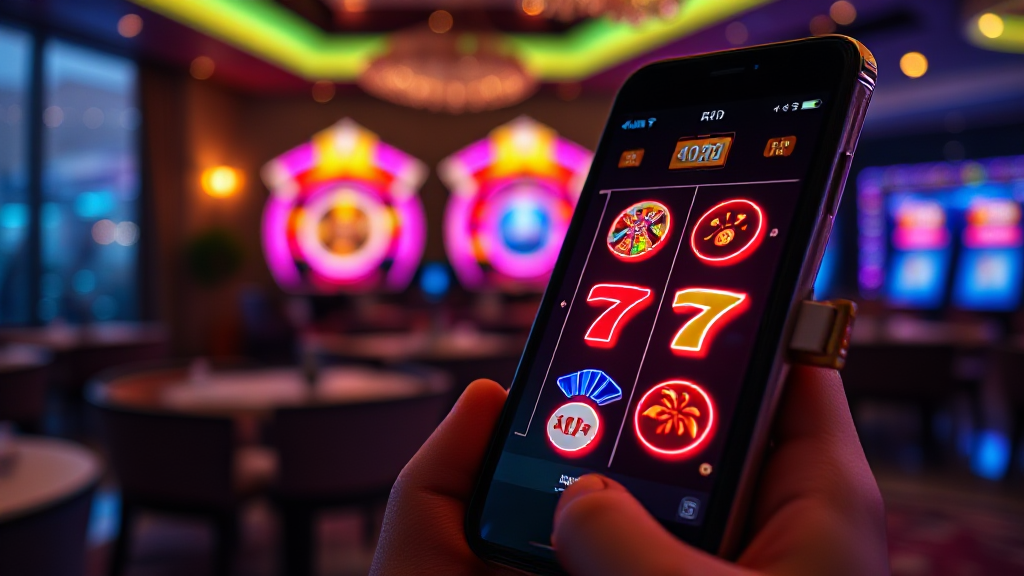
Sound, Tempo and Time in a Mobile Slot Session
A slot session is felt as rhythm before it is understood as math. The reel blur, the tick of each stop, the rise of a near-miss chime — these arrive before any thought about odds or return-to-player percentages. When players search for slot gacor hari ini, they are often chasing a feeling of momentum as much as a result, and that feeling is built from sound design, spin pacing and the small interruptions that reset attention.
This essay looks at how those sensory layers shape the experience of time on a mobile slot. It uses DORAHOKI’s mobile session as the example, because the brand’s interface is built around short, repeatable spins and live information panels that keep the player oriented between rounds. The goal is not to explain strategy but to describe what the session actually feels like from the inside.
The first layer: sound as the session’s pulse
Before a player reads a single number, the phone is already talking. A tap on spin produces a short, dry click, then a soft mechanical whir as the reels begin to move. That whir is not decorative. It is the session’s pulse, a steady signal that something is in motion and that a result is pending. The ear locks onto it faster than the eye can track individual symbols.
Sound in a mobile slot does three jobs at once. It confirms input, it masks the silence between spins, and it marks the moment of resolution. A well-tuned interface keeps these three cues distinct: the tap sounds different from the spin, and the spin sounds different from the stop. When those distinctions blur, the session starts to feel like one continuous noise, and time becomes harder to gauge.
Why the stop sound matters more than the spin sound
The stop is the emotional hinge. A reel that lands with a crisp, weighted thud tells the player the round is over and a new decision is available. A reel that fades out quietly leaves the round feeling unfinished, and the player may tap again before consciously deciding to. In DORAHOKI’s mobile layout, the stop cues are short and separated, which gives each round a clear beginning and end rather than a smear of motion.
Near-miss sounds are the most delicate element. A chime that fires when two matching symbols land and a third nearly does creates a spike of attention without a payout. Designers use this to keep engagement high, but the effect on time perception is real: a session full of near-miss cues feels denser and faster than one with flat audio, even if the number of spins is identical.
Tempo: how spin pacing bends the clock
Pacing is the second layer, and it is where the felt speed of a session is really set. A spin that resolves in under two seconds invites rapid repetition. A spin that takes four or five seconds, with a visible build before the result, invites a slower rhythm. Neither is inherently better, but they produce very different experiences of duration.
On a phone, pacing is compressed by the screen itself. The thumb rests over the spin button, the result appears in the same visual field, and there is no physical separation between decision and outcome. That proximity shortens the perceived gap between rounds. Players often report that ten minutes felt like three, or that an hour vanished, and the cause is usually the tempo of the loop rather than any single big result.
The role of live information panels
DORAHOKI’s mobile session includes live RTP-style information panels that sit alongside the reels. These panels introduce a slower rhythm inside the fast loop. Reading a percentage or a trend line takes a few seconds and pulls the player out of pure reaction mode. That small pause is a tempo change, and tempo changes are what let a player keep track of time rather than losing it entirely.
When the panel is absent or ignored, the loop runs unbroken and the session becomes a single extended present tense. When the panel is used, the session gains checkpoints. The difference is not about winning or losing; it is about whether the player can feel the shape of the session as it happens.
Interruption: the small pauses that reset attention
Every session contains interruptions, and they do more for time perception than most players realize. A notification sliding in, a loading spinner between screens, a bonus transition that takes a beat longer than expected — each one breaks the rhythm and forces a fresh start. That reset is what makes a session feel like a series of rounds rather than one continuous blur.
Interruptions can be designed or accidental. A well-built mobile interface uses deliberate micro-pauses: a brief animation before a free-spin sequence, a short confirmation before a bet change. These are not obstacles. They are anchors. They give the player a moment to notice where they are in the session and how long they have been there.
When interruptions become noise
Too many interruptions produce the opposite effect. If every round is broken by a pop-up, a banner or a promotional overlay, the session loses its pulse and the player stops tracking rounds altogether. The experience becomes fragmented, and fragmented sessions are the ones where time disappears most completely because there is no stable rhythm to measure it against.
The balance point is a session that moves quickly but pauses at meaningful moments. In DORAHOKI’s mobile flow, the interruptions cluster around transitions — entering a feature, changing a stake, returning to the lobby — rather than interrupting individual spins. That placement keeps the core loop clean while still giving attention somewhere to land.
Time perception: why the session feels shorter than it is
The combined effect of sound, tempo and interruption is a distorted clock. Fast spins with dense audio compress perceived duration. Slow panels and deliberate pauses expand it. A session that alternates between the two feels longer and more structured than one that stays in a single gear, even when the actual elapsed time is the same.
This is why the phrase slot gacor hari ini carries such weight for players. It promises a session with momentum, and momentum is a sensory property before it is a statistical one. A player who feels the rhythm building is more likely to describe the session as good, regardless of the final balance, because the felt experience of time was coherent.
There is a practical takeaway hidden in all of this. If you want to keep track of a mobile slot session, listen to its rhythm rather than watching the clock. Notice when the tempo changes, notice when an interruption resets your attention, and notice when the audio stops giving you distinct cues. Those signals tell you more about how long you have been playing than any timer on the screen.
Sound and pacing are the session’s real clock, and they run whether or not anyone is reading them. A session experienced as rhythm is a session that can be understood, and understanding the rhythm is the first step toward playing with awareness rather than momentum alone.